

The MarTech Innovation Award
Marketing technology is judged here on what it can prove. This category covers customer data, campaign automation, personalisation, measurement and the go-to-market systems where attribution is honest and the lift is defensible.
- Independent jury
- 250
- Innovations evaluated
- 4,500+
- Star rating
- 1–5
- Running since
- 2010
Academics, scientists, officials, investors
Across seventeen editions
Every nominee earns an AGBA Innovation Star
India’s longest-running innovation award
Three categories sit close to data. This is the one about method and evidence.
Most nominations that fail here fail because they were in the wrong category. Read across before you write anything.
Innovation in MarTech
Customer data, campaigns, personalisation and measurement, judged on defensible lift.
This category
Innovation in Consumer & Retail
Commerce, in-store technology and the shopping experience itself.
Innovation in Functional AI
AI applied inside business functions, including sales and CX.
Who should enter
- Customer data platforms and identity work with governance built in
- Campaign automation and journey orchestration with measured incremental lift
- Personalisation and recommendation systems tested against a proper control
- Measurement, attribution and marketing-mix work that survived scrutiny
- Creative and content technology that changed production economics
What this award recognises is a claim that holds up — incrementality measured against a control, not a dashboard of impressions. Consent and data governance are part of the judgement.
If the innovation is in the shopping experience, enter Innovation in Consumer & Retail. If it is a general-purpose AI application across functions, enter Innovation in Functional AI.
What the jury looks for
- Problem definition & market opportunityWhether the innovation solves a real problem, backed by evidence and a measurable impact on its target audience.
- InnovativenessNovelty and uniqueness — new technology, functionality or business model — measured against what already exists, including IP.
- Market potential & impactSize and growth of the addressable market, competitive landscape, and scalability across geographies.
- Social impact & sustainabilityContribution to society and the environment, including social responsibility and the UN Sustainable Development Goals.
These are the same four criteria — problem definition, innovativeness, market impact and social/sustainability impact — used to assess every category. In this category the jury also weighs methodological rigour — including what you did to avoid fooling yourselves — the decision that changed as a result and what it was worth, the reproducibility and honesty of the evaluation, and the engineering quality of the data foundation underneath. Read the full evaluation criteria.
Who judges this category
Nominations are assessed by an independent jury, not by the organisers. Jurors are matched to the categories where their expertise lies. These are among those who read marketing technology and customer data entries.
 Dr. Avik SarkarBig Data and AI expert, Indian School of Business
 Prof. Arunabha MukhopadhyayProfessor, Information Technology and Systems, IIM Lucknow
 Prof. Saurabh KumarAssistant Professor, Information Systems, IIM Indore
 Mr. Dilip ChenoyFormer Secretary General, Federation of Indian Chambers of Commerce and Industry
 Kanu GulatiPartner, Khosla Ventures
 Prof. Muhammad BilalProfessor, Applied Artificial Intelligence and Technology Ethics, Birmingham City Business School
 Mr. Sudhanshu MittalHead and Director, Technical Solutions, NASSCOM
 Prof. Julie WallProfessor of Artificial Intelligence, University of East London
Eight of roughly 250. The full panel spans the IITs, the IIMs, the IIITs, the Indian School of Business, NITI Aayog and central ministries, the Department of Science & Technology, MeitY and CERT-In. See the full jury panel.
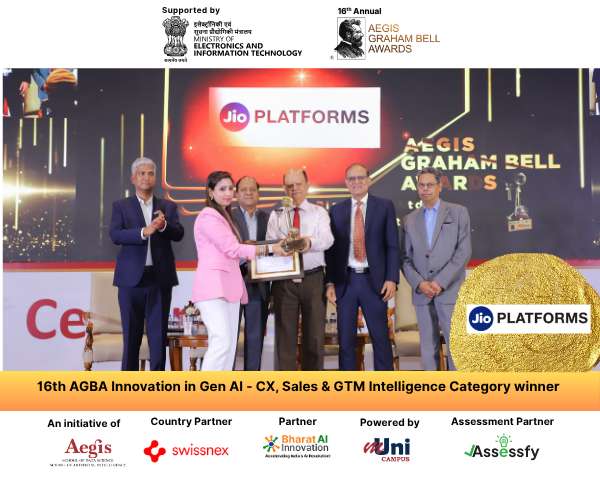
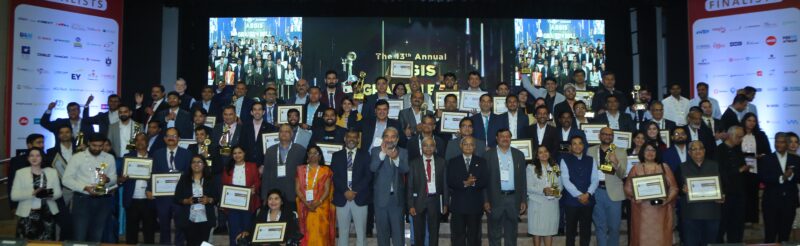
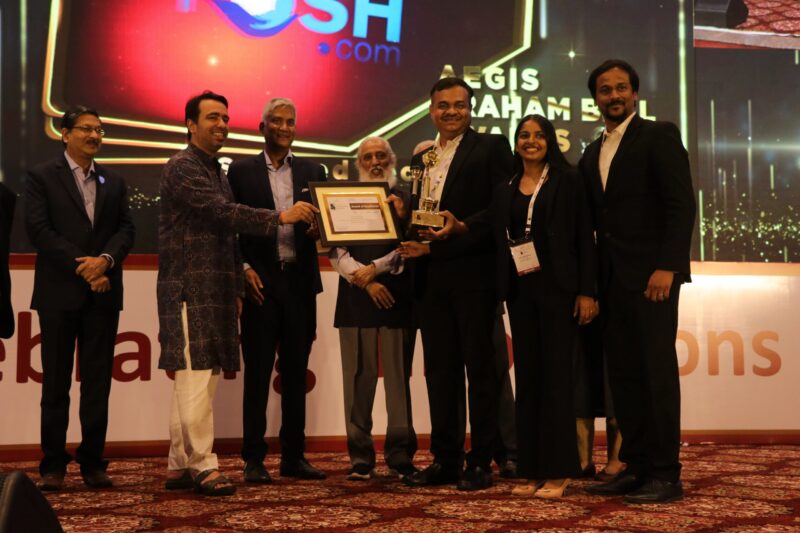
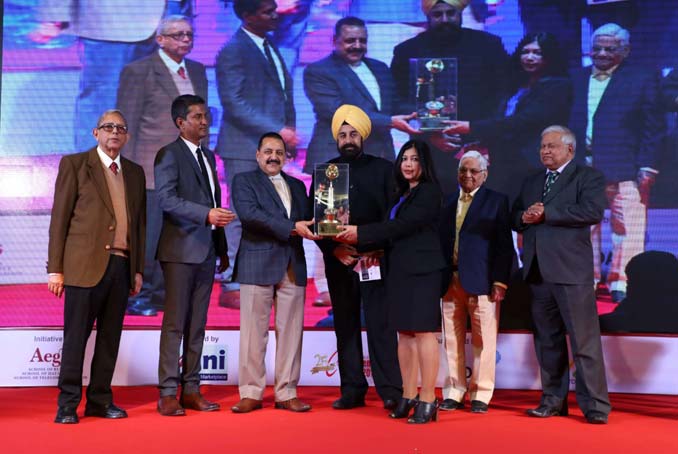
Go-to-market on the podium
The 16th edition recognised customer-facing AI as its own group. MarTech becomes a category in its own right at the 17th.
The closest precedent
MarTech is new as a named category, so the rows below are the nearest recognitions — customer-facing AI at the 16th edition and content and consumer research before that, under the names they carried. The complete record sits in the winners archive.
Category names have changed across editions as the field has moved; the rows above are the closest equivalents in the published record. See the winners archive for the full 1st–16th edition history.
What happens after you submit
-
Stage one · nowNomination registration
Register your company and category through the nomination process, then complete the detailed nomination form and processing fee.
-
Stage twoJury presentation
Present the innovation to the jury and take questions. Jurors score each entry against the four evaluation criteria and rank it within its category.
-
Stage threeStar Certification
Nominees are also assessed for AGBA Innovation Star Certification, an independent maturity rating alongside the category judging.
-
Stage fourFinalists announced
Once every category has been evaluated, finalists are announced on the website ahead of the ceremony.
-
Stage fiveAward ceremony
Winners are honoured on 18 February 2027 at Hotel Ashoka, Chanakyapuri, New Delhi.
Before you write your nomination
What counts as proof of lift?
A control group, a holdout or a properly designed geo test. Last-click attribution on its own will not carry a nomination.
Is consent and data governance part of the judgement?
Yes. Identity and customer data work is read alongside how consent was obtained, stored and honoured.
Are in-house marketing teams eligible?
Yes. Internal platforms and campaigns compete on the same criteria as vendor products.
How do I submit a nomination?
Nominations are submitted through the nomination process, which sets out the stages, the supporting material required and the current edition’s dates.
Put your lift in front of the panel
Nominations for the MarTech Innovation Award are read by an independent jury of analysts, academics and industry practitioners. Bring the test design with the result.