
The Social Good Innovation Award
This category is for technology aimed at people the market usually skips. It recognises work in access, inclusion, livelihoods, disability, education and public benefit, judged on who was reached and what changed for them.
- Independent jury
- 250
- Innovations evaluated
- 4,500+
- Star rating
- 1–5
- Running since
- 2010
Academics, scientists, officials, investors
Across seventeen editions
Every nominee earns an AGBA Innovation Star
India’s longest-running innovation award
Three categories sit close to data. This is the one about method and evidence.
Most nominations that fail here fail because they were in the wrong category. Read across before you write anything.
Innovation in Social Good
Access, inclusion, livelihoods and public benefit, judged on reach and outcome.
This category
Innovation in Smart City
Civic systems and municipal service delivery at city scale.
Innovation in AgriTech
Farm livelihoods, producer organisations and rural market access.
Who should enter
- Access and inclusion technology for underserved or remote populations
- Livelihood, skilling and financial inclusion work with participant-level data
- Assistive and accessibility technology built with the people who use it
- Education, health or civic access programmes with measured reach
- Non-profit and public-benefit deployments where sustainability of the model is shown
What this award recognises is a group of people who are measurably better off, named honestly — how many, for how long, and what happens when the grant ends.
If the work is a municipal or civic system, enter Innovation in Smart City. If it centres on farm livelihoods, enter Innovation in AgriTech.
What the jury looks for
- Problem definition & market opportunityWhether the innovation solves a real problem, backed by evidence and a measurable impact on its target audience.
- InnovativenessNovelty and uniqueness — new technology, functionality or business model — measured against what already exists, including IP.
- Market potential & impactSize and growth of the addressable market, competitive landscape, and scalability across geographies.
- Social impact & sustainabilityContribution to society and the environment, including social responsibility and the UN Sustainable Development Goals.
These are the same four criteria — problem definition, innovativeness, market impact and social/sustainability impact — used to assess every category. In this category the jury also weighs methodological rigour — including what you did to avoid fooling yourselves — the decision that changed as a result and what it was worth, the reproducibility and honesty of the evaluation, and the engineering quality of the data foundation underneath. Read the full evaluation criteria.
Who judges this category
Nominations are assessed by an independent jury, not by the organisers. Jurors are matched to the categories where their expertise lies. These are among those who read social good and inclusion entries.
 Mr. Dilip ChenoyFormer Secretary General, Federation of Indian Chambers of Commerce and Industry
 Ms. Anju Sharma IASPrincipal Secretary, Labour, Employment and Skill Department, Government of Gujarat
 Dr. Mathew VargheseHead of Orthopaedics, St Stephens Hospital and public health expert
 Dr.Ashok AlurDirector, Centre of Excellence for Farmer Producer Organizations
 Dr. Manoj Kumar PatairiyaFormerly Head and Adviser, National Council for Science and Technology Communication
 Dr. Srikanth RupavatharamScientist, Digital Agriculture, ICRISAT
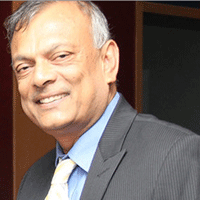 Mr. Amitabh SatyamAuthor and Chairman, Smart Transformations
 Ms. Disha AgarwalSenior Programme Lead, Council on Energy, Environment and Water
Eight of roughly 250. The full panel spans the IITs, the IIMs, the IIITs, the Indian School of Business, NITI Aayog and central ministries, the Department of Science & Technology, MeitY and CERT-In. See the full jury panel.
Reach on the podium
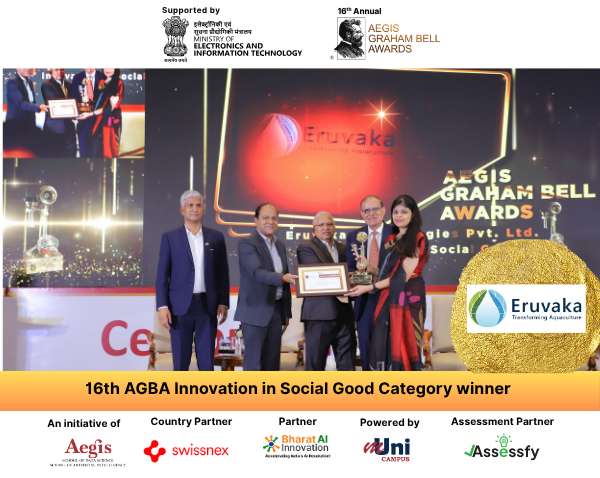
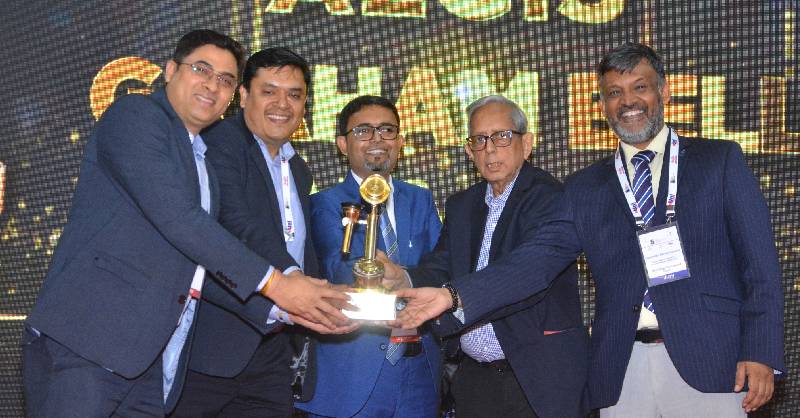
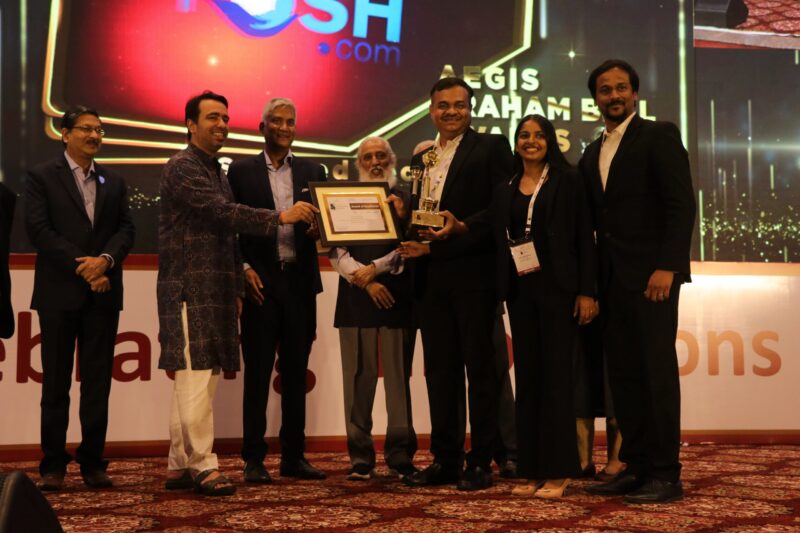
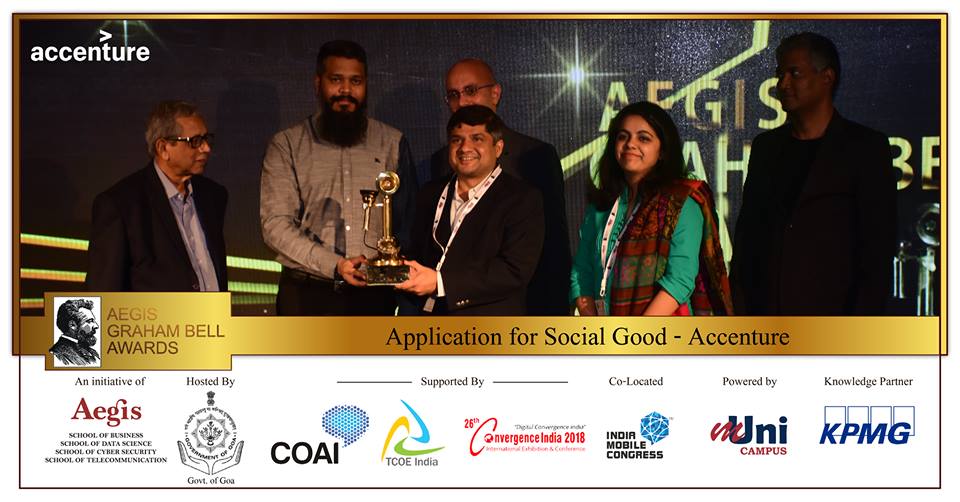
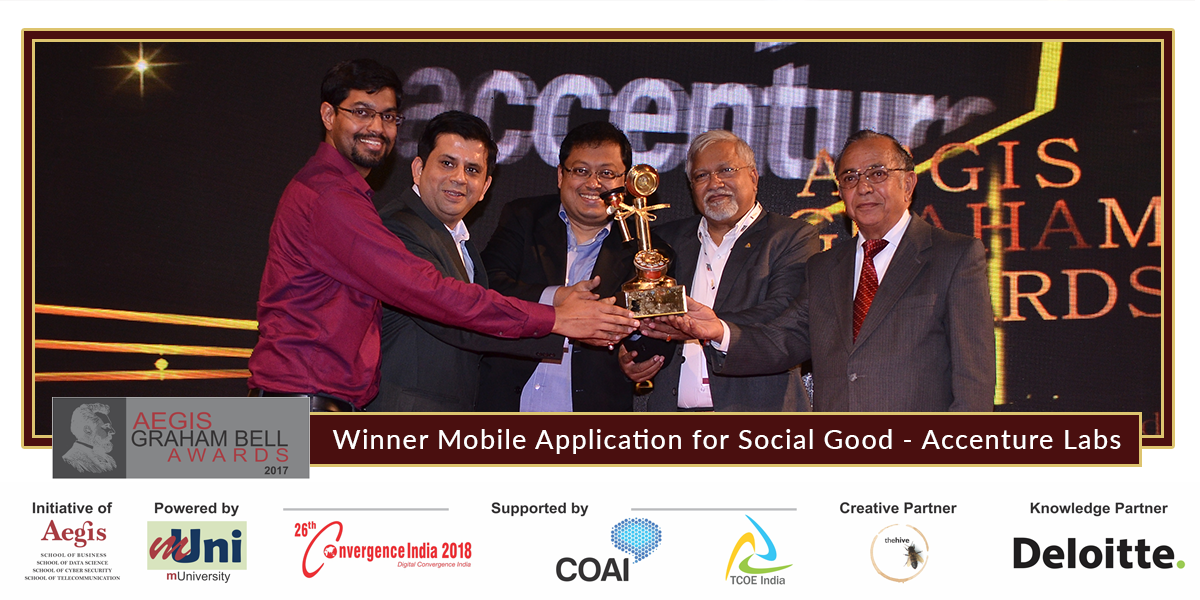
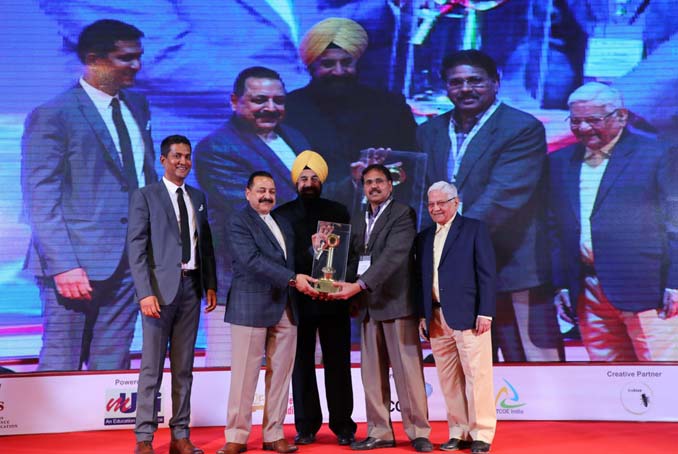
Social good has been recognised since the early editions. These are among the most recent winners, photographed at the ceremony.

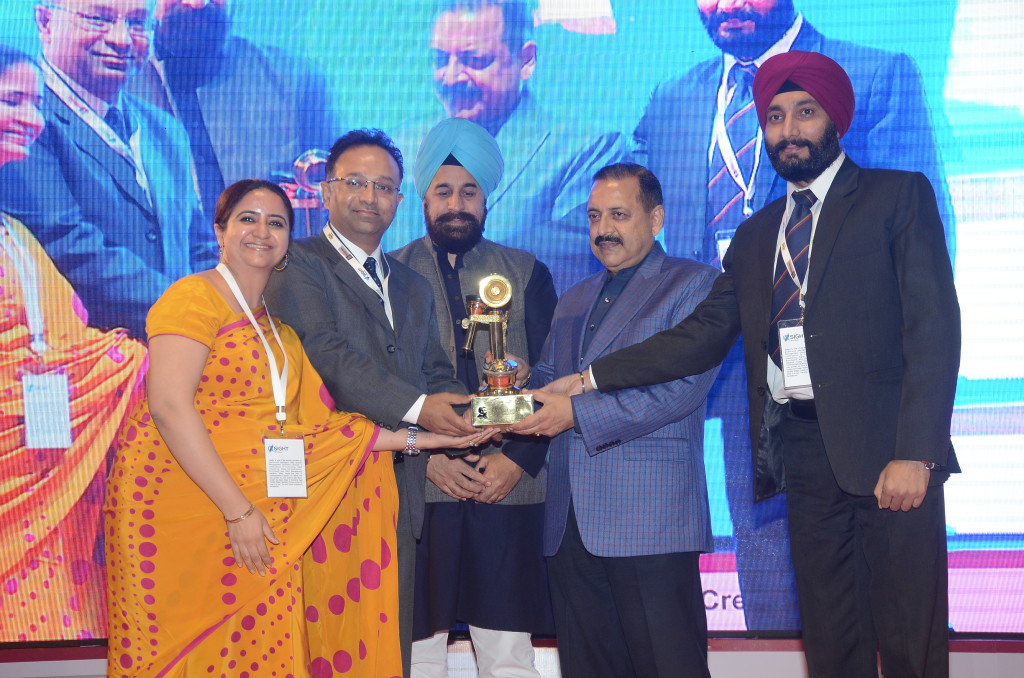
Previous winners
Social good has been a standing category, occasionally titled Tech for Social Good. The complete record sits in the winners archive.
Category names have changed across editions as the field has moved; the rows above are the closest equivalents in the published record. See the winners archive for the full 1st–16th edition history.
What happens after you submit
-
Stage one · nowNomination registration
Register your company and category through the nomination process, then complete the detailed nomination form and processing fee.
-
Stage twoJury presentation
Present the innovation to the jury and take questions. Jurors score each entry against the four evaluation criteria and rank it within its category.
-
Stage threeStar Certification
Nominees are also assessed for AGBA Innovation Star Certification, an independent maturity rating alongside the category judging.
-
Stage fourFinalists announced
Once every category has been evaluated, finalists are announced on the website ahead of the ceremony.
-
Stage fiveAward ceremony
Winners are honoured on 18 February 2027 at Hotel Ashoka, Chanakyapuri, New Delhi.
Before you write your nomination
Do non-profits and government programmes compete against companies?
They are read on the same criteria. What matters is reach and outcome, not the legal form of the organisation.
How is sustainability of the model assessed?
By what happens when the funding cycle ends. Say who pays for it afterwards and what evidence you have that it continues.
Is a pilot with a small cohort eligible?
Yes, provided the outcome data is real and the path to more people is described honestly.
How do I submit a nomination?
Nominations are submitted through the nomination process, which sets out the stages, the supporting material required and the current edition’s dates.
Put the people you reached in front of the panel
Nominations for the Social Good Innovation Award are read by an independent jury of public health, skilling and development practitioners. Bring participant-level evidence.