

The Cyber Security Innovation Award
Security work is judged differently from most innovation: the measure is what did not happen. This category recognises detection, identity, privacy engineering and security operations where the design decisions stand up to an adversary who was actually trying.
- Independent jury
- 250
- Innovations evaluated
- 4,500+
- Star rating
- 1–5
- Running since
- 2010
Academics, scientists, officials, investors
Across seventeen editions
Every nominee earns an AGBA Innovation Star
India’s longest-running innovation award
Security sits beside the platform categories. This is the one about the adversary.
Most nominations that fail here fail because they were in the wrong category. Read across before you write anything.
Innovation in Cyber Security
Threat detection, identity and zero trust, privacy engineering and security operations.
This category
Innovation in Core AI
Foundation models, agentic AI, RAG systems, edge inference and MLOps.
Innovation in Cloud Computing
Cloud platforms, digital infrastructure and the systems everything else runs on.
Who should enter
- Threat detection and response platforms with evidence from real incidents
- Identity, access and zero-trust architectures deployed at scale
- Privacy engineering — data minimisation, anonymisation, confidential computing
- Security for OT, IoT and critical national infrastructure
- Security operations tooling that measurably cut dwell time or analyst load
What this award recognises is an adversary who failed — an incident detected earlier, an exposure closed, an attack that never became a breach. A compliance checklist alone is not the case.
If the innovation is an AI system that happens to touch security, read Innovation in Core AI first. If it is the infrastructure layer itself, consider Innovation in Cloud Computing.
What the jury looks for
- Problem definition & market opportunityWhether the innovation solves a real problem, backed by evidence and a measurable impact on its target audience.
- InnovativenessNovelty and uniqueness — new technology, functionality or business model — measured against what already exists, including IP.
- Market potential & impactSize and growth of the addressable market, competitive landscape, and scalability across geographies.
- Social impact & sustainabilityContribution to society and the environment, including social responsibility and the UN Sustainable Development Goals.
These are the same four criteria — problem definition, innovativeness, market impact and social/sustainability impact — used to assess every category. In this category the jury also weighs adversarial soundness — whether the work would survive a determined attacker, not just a checklist — the evidence of incidents detected, dwell time reduced and exposure closed, architectural originality over repackaged detection rules, and the operational reality of running it on a normal team. Read the full evaluation criteria.
Who judges this category
Nominations are assessed by an independent jury, not by the organisers. Jurors are matched to the categories where their expertise lies. These are among those who read cyber security entries.
 Dr. Muktesh Chander, IPSSpecial Commissioner, Delhi Police; former Centre Director, Cyber Division, NCIIPC
 Ms. Tulika PandeyDirector, Cyber Security, Ministry of Electronics & Information Technology
 Prof. Somanath TripathyProfessor, Computer Science and Engineering, IIT Patna
 Prof. Arunabha MukhopadhyayProfessor, Information Technology and Systems, IIM Lucknow
 Dr. Aloknath DeFormer Chief Technology Officer, Samsung R&D Institute India
 Dr. Avik SarkarBig Data and AI expert, Indian School of Business
 Prof. Saurabh KumarAssistant Professor, Information Systems, IIM Indore
 Prof. Anshul KumarProfessor, Computer Science and Engineering, IIT Delhi
Eight of roughly 250. The full panel spans the IITs, the IIMs, the IIITs, the Indian School of Business, NITI Aayog and central ministries, the Department of Science & Technology, MeitY and CERT-In. See the full jury panel.
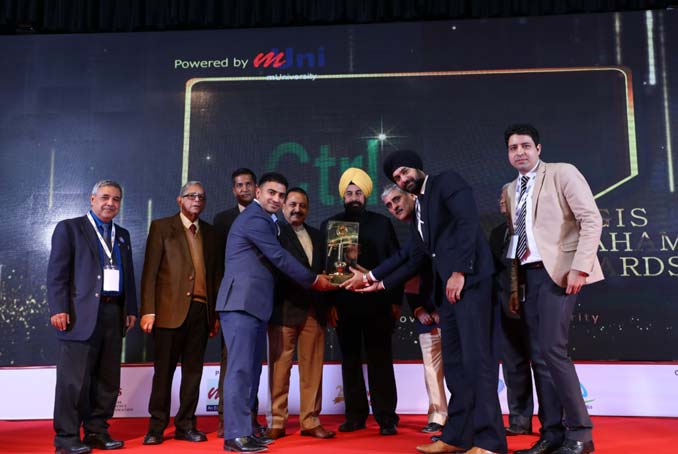
What did not happen, on the podium
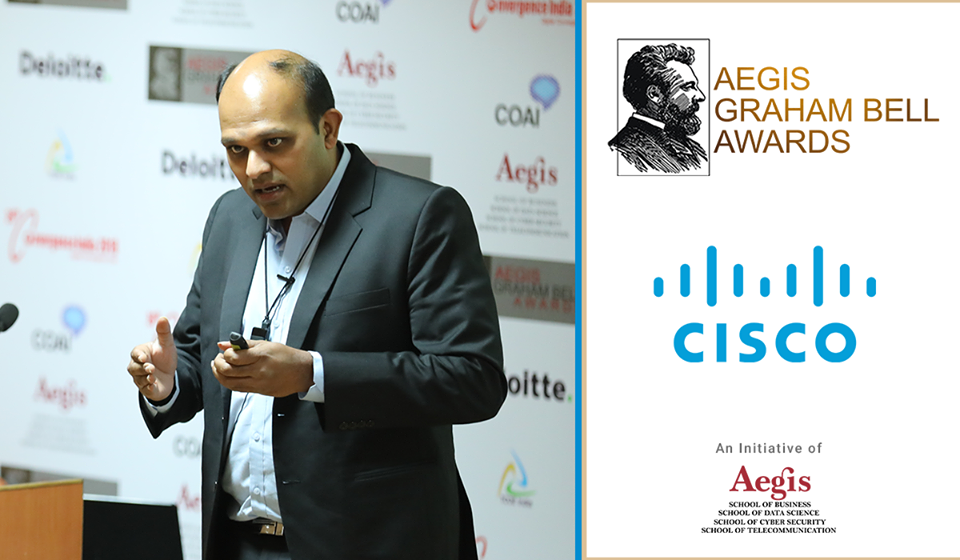
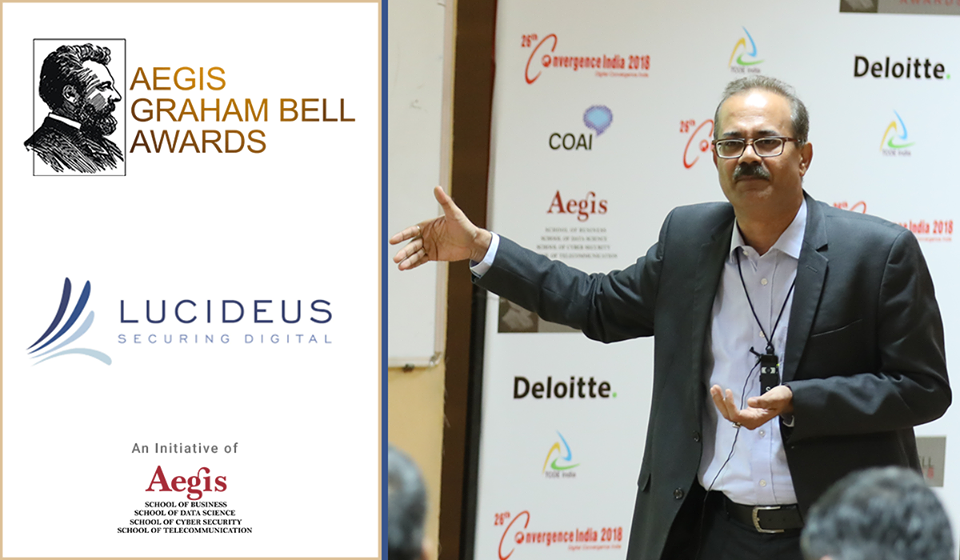
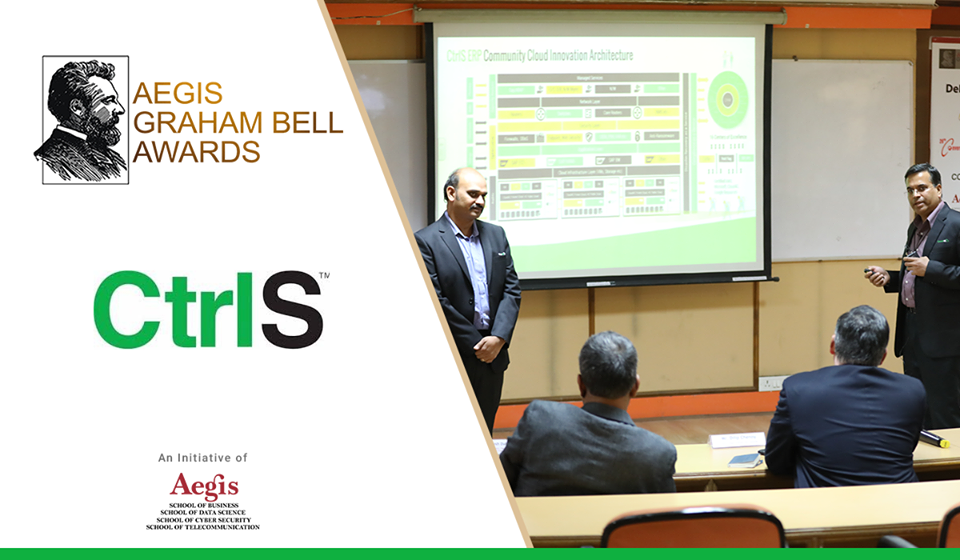
Cyber security has run as its own award since the 7th edition. These are the winners photographed at the ceremony, most recent first, and three of them in front of the jury that judged them.
On the podium
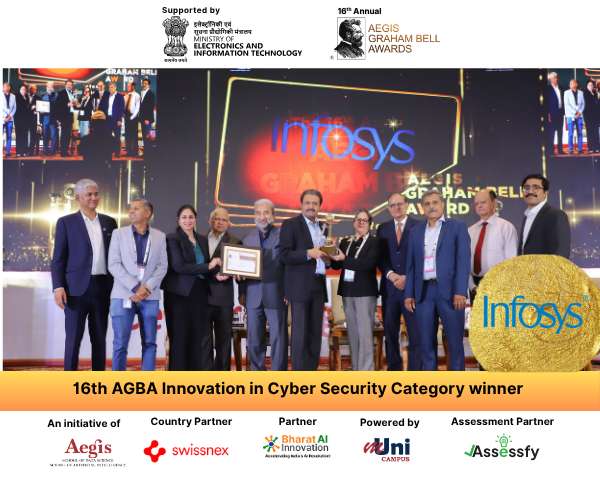
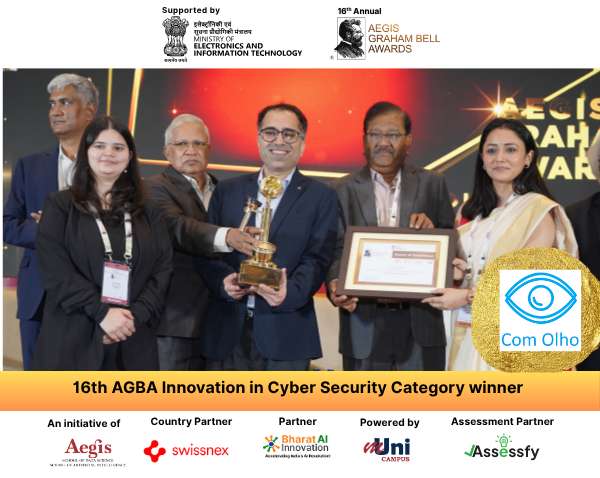
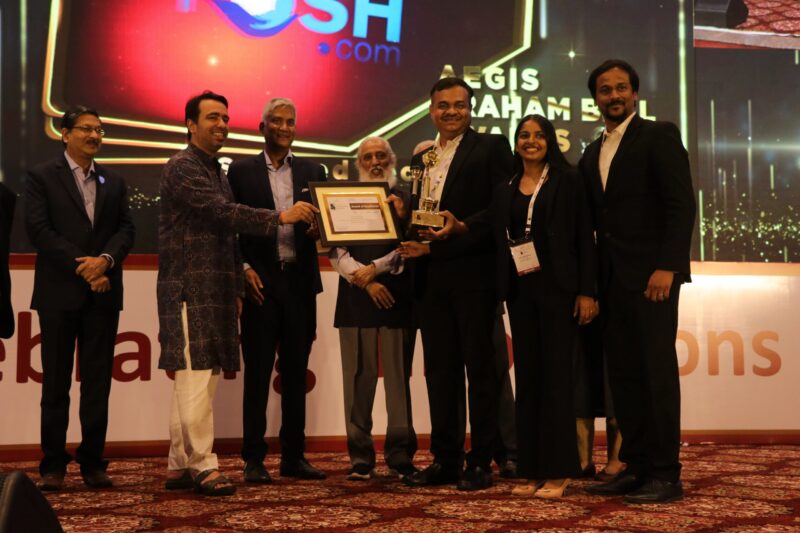
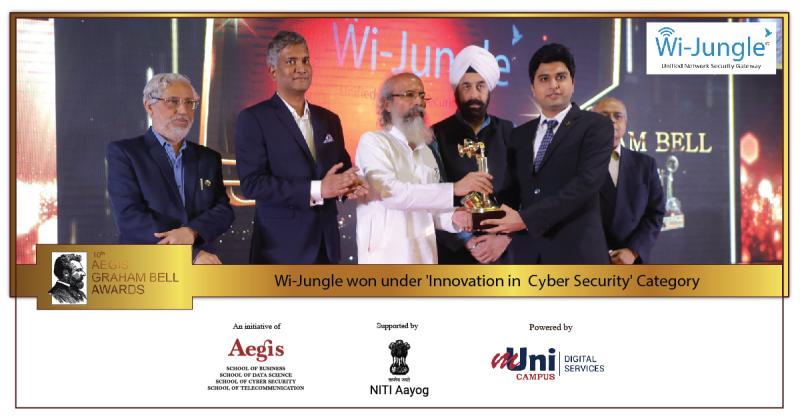


Before the panel
Previous winners
Cyber security has been recognised under its own award across editions; each row carries the award actually won. The complete record sits in the winners archive.
Category names have changed across editions as the field has moved; the rows above are the closest equivalents in the published record. See the winners archive for the full 1st–16th edition history.
What happens after you submit
-
Stage one · nowNomination registration
Register your company and category through the nomination process, then complete the detailed nomination form and processing fee.
-
Stage twoJury presentation
Present the innovation to the jury and take questions. Jurors score each entry against the four evaluation criteria and rank it within its category.
-
Stage threeStar Certification
Nominees are also assessed for AGBA Innovation Star Certification, an independent maturity rating alongside the category judging.
-
Stage fourFinalists announced
Once every category has been evaluated, finalists are announced on the website ahead of the ceremony.
-
Stage fiveAward ceremony
Winners are honoured on 18 February 2027 at Hotel Ashoka, Chanakyapuri, New Delhi.
Before you write your nomination
We cannot disclose our incidents. Can we still enter?
Yes. You may generalise or anonymise incident detail in your nomination, as long as the jury can still judge the substance of what you built. Check the nomination guidelines for how sensitive material should be submitted.
Is a security feature inside a larger product eligible?
Yes, if the security work is the innovation being claimed. Judge it by whether the nomination would still stand if the rest of the product were removed.
Is there a separate startup track?
Recent editions have recognised enterprise and startup entries separately — the 16th edition named both an enterprise and a startup winner in this category. The nomination process sets out the tracks open for the 17th edition.
How do I submit a nomination?
Nominations are submitted through the nomination process, which sets out the stages, the supporting material required and the current edition’s dates.
Put what did not happen in front of the panel
Nominations for the Cyber Security Innovation Award are read by an independent jury of practitioners, academics and officials. Bring the incident evidence, not the checklist.